📌 Organizational Structure
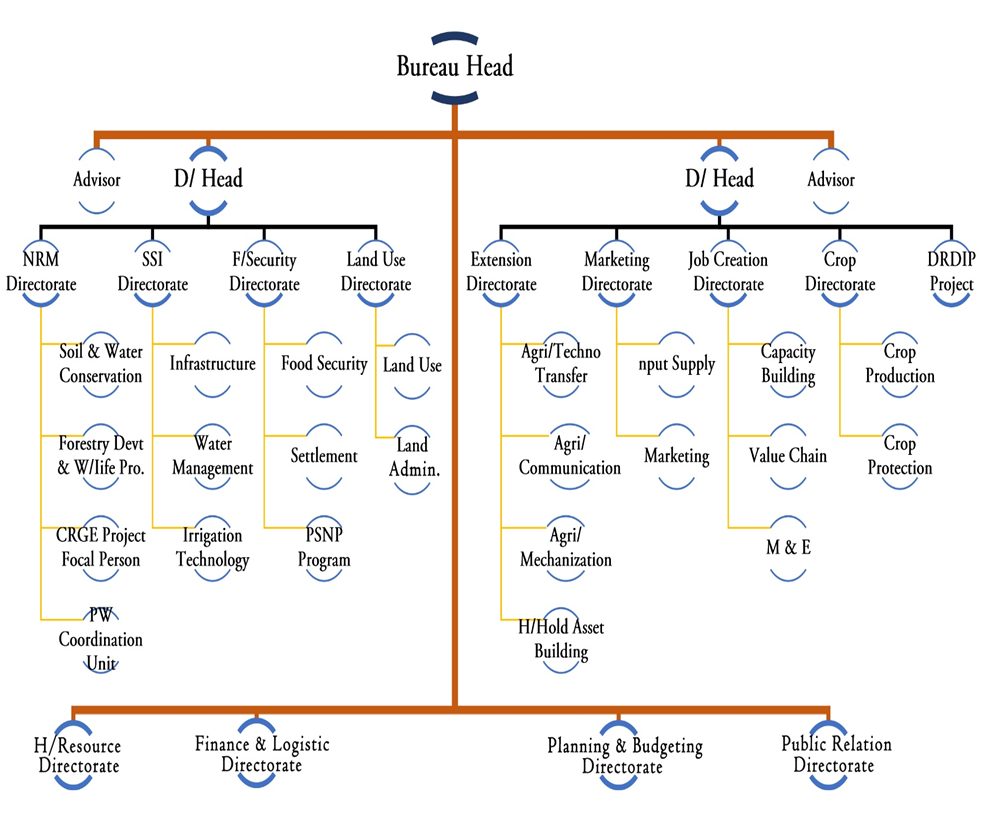
The Bureau of Agriculture's organizational structure reflects our comprehensive approach to agricultural development in the Somali Region, focusing on sustainability and innovation across all directorates. Each directorate specializes in key areas, employing advanced practices to boost productivity and ensure environmental sustainability.
🌱 Core Technical Directorates
NRM Directorate
Natural Resource Management, focusing on soil conservation, water harvesting, and sustainable land use planning.
SSI Directorate
Small Scale Irrigation, promoting efficient irrigation technologies and water management.
F/Security Directorate
Food Security, integrating climate-smart agriculture to protect food systems.
Land Use Directorate
Land Administration, focusing on land tenure security and optimal land allocation.
Extension Directorate
Agricultural Extension Services, offering training on innovative farming techniques.
🔧 Supporting Directorates
Marketing Directorate
Agricultural Market Development, connecting farmers to local and international buyers.
Job Creation Directorate
Employment Opportunities, fostering rural entrepreneurship.
H/Resource Directorate
Human Resources Management, focusing on staff capacity building.
Finance & Logistics Directorate
Financial Management, ensuring proper resource allocation for projects.
Planning & Budgeting Directorate
Strategic Planning and data-driven budgeting for agricultural success.
🔍 Key Directorates Overview
Crop Production
Promoting improved crop varieties and precision agriculture to enhance food security and productivity.
Food Security
Implementing strategies for climate-resilient crops and food preservation techniques.
Natural Resource Management
Adopting integrated land and water management practices for environmental sustainability.
Extension
Equipping farmers with modern agricultural techniques to boost productivity.
Marketing
Supporting farmers with market intelligence and export opportunities to improve sales.
Human Resource Management
Building a skilled workforce through recruitment, training, and career development programs.
📌 Operational Framework
Regional Level
Policy development and strategic planning to address agricultural challenges, program design and coordination with collaborative partnerships, resource mobilization, and allocation to impactful projects, monitoring, evaluation, and quality assurance of programs, and partnerships with public and private sectors for resource leveraging.
Zonal & Woreda Level
Local-level program implementation and community engagement, extension service delivery and farmer support, data collection and reporting for future planning, local stakeholder coordination for effective implementation, and community mobilization for ownership and sustainability.